Sewer Line Leak Detection in Trenton, NJ
A failing drainage system presents significant health and property risks. In older properties throughout Trenton, aging cast-iron and clay sewer laterals slowly deteriorate over decades. Because these lines operate via gravity rather than pressure, a cracked sewer pipe in Trenton, NJ may leak slowly into the surrounding soil for years before a catastrophic backup occurs. Accurate sewer line leak detection in Trenton, NJ is the only way to assess the true condition of your underground plumbing.
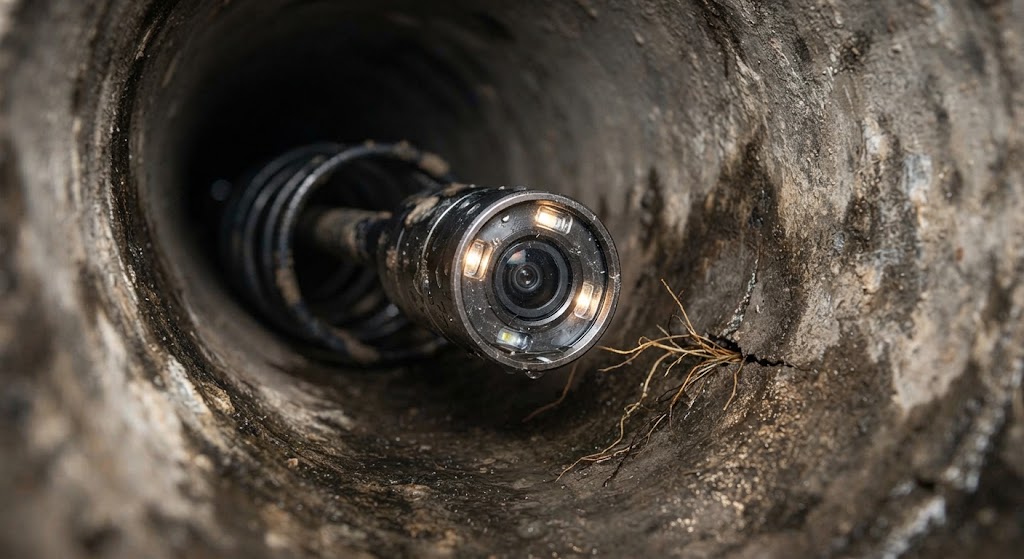
If you are experiencing recurring clogs, unexplained basement moisture, or persistent odors, blindly snaking the line will only provide temporary relief. We utilize advanced camera inspection technology to find the exact point of failure within the system without destroying your property in the process.
Locating Drainage Failures
Because drainage leaks do not produce the same acoustic signatures as pressurized supply lines, specialized visual and atmospheric testing is required to pinpoint the issue.
Sewer Camera Inspection
By feeding a high-resolution, waterproof camera into the lateral line, we visually inspect the interior of the pipe. This allows us to identify fractures, offset joints, root intrusion, and belly formations that cause wastewater to pool and leak.
Smoke Testing (Where Appropriate)
When investigating elusive sewer odors that permeate a building, harmless vapor can be introduced into the drainage system. The vapor escapes through hidden cracks or dried P-traps, revealing exactly where sewer gases are entering the living space.
Diagnostic Coordination
A severely leaking sewer line can wash out the supporting soil beneath a water service line, leading to secondary plumbing failures. We assess the entire structural context of the problem.
Repair Options and Considerations
Once the sewer line leak repair in Trenton, NJ is deemed necessary, understanding the nature of the break dictates the approach. A minor fracture caused by tree roots differs greatly from a completely collapsed cast-iron run beneath a basement floor.
As general options, repairs typically fall into two categories: trenchless lining or traditional excavation. Trenchless methods involve inserting an epoxy-saturated liner into the existing pipe, creating a new structural wall from within. This is highly effective if the original pipe still holds its general shape. However, if the pipe has suffered a catastrophic structural collapse, excavation is the only viable method for replacement. Our inspection provides the clarity needed to make this decision.
If the moisture you are seeing is clean water rather than wastewater, the issue may actually be a pressurized supply leak requiring hidden water leak detection.
Frequently Asked Questions
How do you inspect an underground sewer line?
We utilize high-resolution fiber-optic cameras that are inserted into the drainage system. This allows us to visually navigate the interior of the pipe and identify cracks, root intrusions, or collapsed sections without excavation.
What are the signs of a leaking sewer line?
Common symptoms include persistent sewer odors, wet or sunken areas in the yard, unexplained moisture in basement foundation walls, and frequent or recurring drainage backups.
Do I have to dig up my yard to fix a sewer leak?
Not always. As a general option, if the pipe structure is still somewhat intact, trenchless pipe lining technologies may be appropriate to repair the line internally. If the pipe is completely collapsed, traditional excavation becomes necessary.