Shower & Bathroom Leak Detection in Trenton, NJ
Bathrooms are the most common source of residential water damage. Because of the high volume of water usage and the dense concentration of plumbing fixtures, pinpointing the exact failure point is often complex. The appearance of a ceiling stain in the room below does not immediately indicate a burst pipe; it frequently points to a slow, intermittent failure. Accurate shower leak detection in Trenton, NJ is necessary to separate structural degradation from plumbing issues.
If you have noticed peeling paint on the ceiling below a second-floor bathroom, water pooling near the base of a toilet, or spongy flooring around a tub, professional assessment is critical before the subfloor rots.
Identifying Common Bathroom Failures
Because bathrooms combine pressurized supply lines, gravity-fed drainage, and surface waterproofing, isolation testing is required to find the true source.
Shower Pan and Drain Leaks
A failed waterproof membrane beneath the tile (the shower pan) allows water to seep directly into the joists below during use. Similarly, a leaking tub drain connection will cause intermittent dripping that only occurs when the fixture is active.
Valve and Supply Leaks
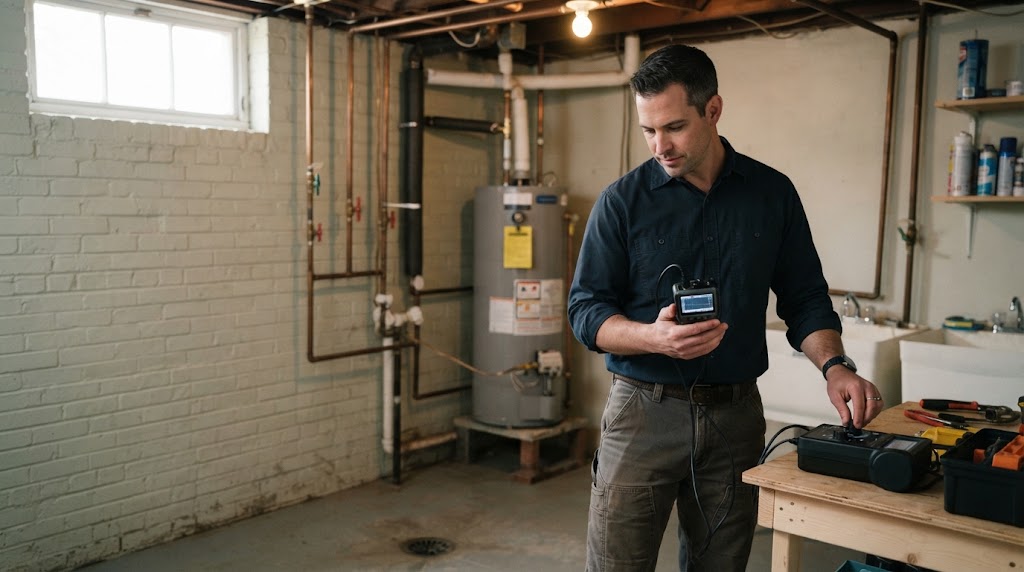
Concealed shower mixing valves can develop slow drips inside the wall cavity. Because these lines are pressurized, they often require hidden water leak detection methods like thermal imaging to trace the moisture signature before accessing the wall.
Toilet Supply and Wax Ring Issues
A compromised wax ring beneath a toilet allows wastewater to seep into the floor structure with every flush, eventually destroying the ceiling below. We also inspect the localized supply lines for small fractures.
Surface Failures vs. Plumbing Leaks
It is important to distinguish between a broken pipe and a compromised surface. Failed caulk around a bathtub, deteriorated tile grout, or improper flashing can allow significant amounts of shower water to penetrate the wall board. While this causes severe damage, it is not a plumbing leak in the traditional sense.
When investigating, we utilize moisture mapping and, where technically appropriate, flood testing. By isolating the shower pan and observing the structural response below, we confirm whether the issue requires pipe leak repair or if the enclosure itself needs to be rebuilt by a contractor.
In multifamily buildings, a leaking shower can easily cross property lines. We regularly assist with condo leak detection to resolve disputes between adjacent units.
Frequently Asked Questions
How do you test if a shower pan is leaking?
When appropriate, we perform flood testing by plugging the shower drain and filling the base with water. We then observe the area below—often using thermal imaging or moisture meters—to confirm if the waterproofing membrane itself has failed rather than the plumbing.
Why is there a stain on the ceiling below my bathroom?
Ceiling stains below bathrooms are typically caused by compromised wax rings under toilets, leaking tub drains, failed shower valve connections, or degraded surface grout that allows water to penetrate the floor structure during use.
Is missing grout considered a plumbing leak?
No. While failed grout and caulk can allow significant amounts of water to bypass the surface and cause structural damage, this is a surface failure rather than a pressurized pipe leak. Our detection process distinguishes between the two.